
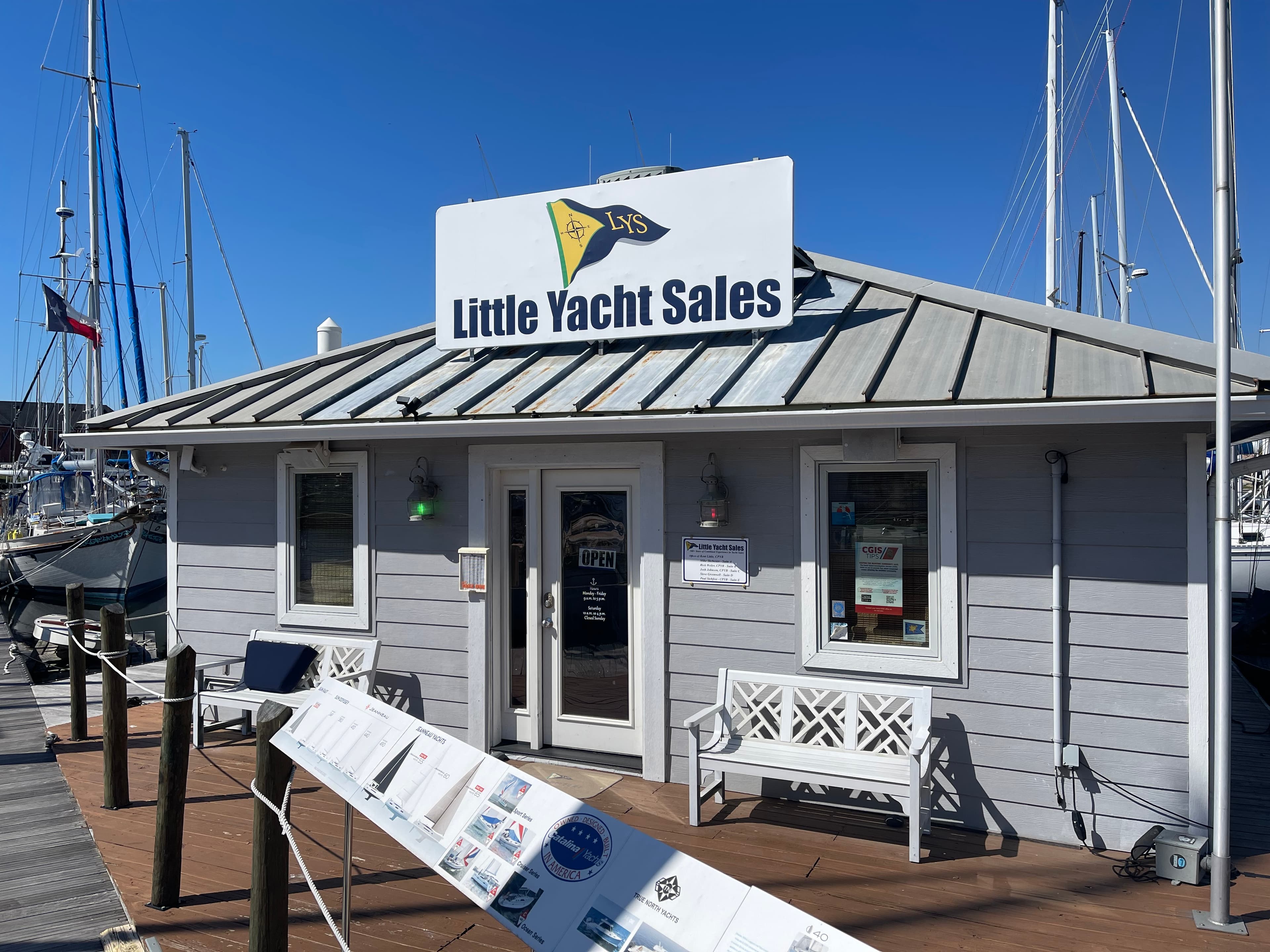
Why You Should List Your Boat With a Broker Who Has a Real Office
Walk any marina on a Saturday and look for a yacht brokerage with the lights on. These days, you may not find one. Many brokers now work from a phone, a laptop and a home office. So before you list your boat with a broker, ask a simple question: where is your office, and who is in it on the weekend?
At Little Yacht Sales, the answer is easy. We have two offices, and both sit right on the docks: one at Waterford Harbor Marina in Kemah and one at South Shore Harbour Marina in League City. Each is staffed full-time, six days a week. Just as important, each office has about 50 boat slips, so our listings are tied up a few steps from the door. Here's why that matters when it's time to sell your boat.
Why so few yacht brokerages still have an office
A waterfront office costs money. There's rent, utilities and a person at the desk all day. Meanwhile, online listing sites made it possible to run a brokerage from almost anywhere. As a result, many brokers gave up the office and kept the website.
That model works fine for posting photos. However, it doesn't put buyers on boats. A listing page can't answer a question at 4 p.m. on a Saturday. It can't open a hatch, start an engine or walk a buyer down the dock.
What a full-time office does for your listing
A staffed office turns casual interest into real showings. Here's what that looks like day to day:
Walk-in buyers get help. Boaters stroll the docks on weekends. When someone stops by, a broker is there to talk with them.
Showings happen on short notice. A buyer doesn't wait three days for a broker to drive in. We can usually show the boat the same day.
Your boat is watched. Because we're on site, we notice a chafed dock line or a bilge pump that's running too often.
You always know where to find us. Questions about your listing don't go to voicemail for a week. You can call, or simply stop by.
Buyers come to see one boat and buy another
This is the part most sellers never think about. A large share of buyers don't know exactly what they want until they step aboard. Photos can't show headroom, how the cockpit feels or how the galley flows.
Picture a couple who drives in to see a 36-foot sloop. Once aboard, the cockpit feels smaller than they imagined. Two slips down, though, sits a 40-footer they had scrolled right past online. They step aboard, it fits, and they make an offer that afternoon.
It happens more often than you'd think. Yet it can only happen when boats are grouped together. In other words, a dock full of listings works a lot like a car lot. Buyers compare, narrow it down and decide, all in one visit.
Why grouped listings help sellers, not just buyers
When your boat sits on a busy sales dock, it gets traffic from buyers who came for other listings. Every showing on that dock is another chance for your boat to be seen. Your boat also benefits from side-by-side comparison. A well-kept, fairly priced boat stands out when buyers can see the alternatives.
In short, you get the foot traffic of the whole dock, not just the buyers who searched for your exact make and model. With about 100 slips across our two docks, buyers always have plenty to compare.
The problem with an isolated listing
Now consider a boat listed by itself, behind a house or at a distant marina. Only buyers who search for that specific boat will ever see it. Then they have to schedule a time and drive out. Often, they meet a broker who also had to drive out.
If the boat isn't quite right, the visit simply ends. There's nothing else to look at, so the buyer goes home. Fewer showings usually mean more time on the market and, eventually, a lower price.
Questions to ask before you list your boat with a broker
Before you sign a listing agreement, ask any broker these questions:
Do you have a physical office, and where is it?
Is it staffed full-time? Which days?
Is the office at a marina where your listings are kept?
Can I move my boat to your sales dock while it's listed?
Who shows my boat when you're busy with another client?
How many other boats do you have in the water nearby?
The answers will tell you quickly whether a broker can actually put buyers aboard your boat.
Bring your boat to our dock
If you're ready to sell, we'd like to show your boat where buyers already are. Little Yacht Sales has two staffed offices on Clear Lake, each with about 50 slips of listings right outside the door:
Kemah: Waterford Harbor Marina, 800 Mariners Drive, Pier 6/7, Kemah, Texas
League City: South Shore Harbour Marina, 2551 South Shore Blvd., Pier 13, League City, Texas
Call us at 281-334-6500, or stop by either office. Let's talk about getting your boat on the dock and in front of buyers.
Frequently asked questions
Why does it matter if a yacht broker has an office?
A staffed office means someone can greet walk-in buyers, show boats on short notice and keep an eye on your listing. Brokers without an office often need days to set up a showing, and some interested buyers move on.
Should I move my boat to the broker's dock to sell it?
In most cases, yes. A boat on a busy sales dock gets seen by buyers who came for other listings. It is also easier to show, compare and sea trial when the broker is a few steps away.
Can my boat still sell if it stays at my own dock?
Yes, but it usually gets fewer showings. Only buyers searching for that exact boat will make the trip. If it isn't the right fit, there's nothing else nearby to see.
Do buyers really buy a different boat than the one they came to see?
Yes, and it's common. Many buyers learn what they want only after stepping aboard. When several boats sit on the same dock, they can compare on the spot and buy the one that fits.
What should I ask before I list my boat with a broker?
Ask whether the broker has a physical office, whether it's staffed full-time and on which days, and whether you can keep your boat on their sales dock while it's listed.